Is Uxbridge in London? Yes, it is. It’s part of the London Borough of Hillingdon, in west London. But the full answer is a bit more layered than that, especially if you’ve heard it called part of Middlesex too. Here’s exactly where Uxbridge sits, and why the confusion exists in the first place.
Quick answer: Yes. Uxbridge is in Greater London, in the London Borough of Hillingdon, and has been since 1965.
Last updated: 5 October 2026.
The short answer
Uxbridge is in Greater London. It sits in the London Borough of Hillingdon, and it’s actually that borough’s administrative headquarters. Hillingdon Council itself is based in Uxbridge.
Uxbridge is roughly 15.4 miles northwest of Charing Cross, which is the traditional centre point of London. That puts it firmly on the western edge of the capital, rather than anywhere near the centre.
Is Uxbridge in London or Middlesex?
Historically, Uxbridge was part of Middlesex. That’s the source of most of the confusion. Middlesex was an ancient county that covered much of what’s now outer London, including Uxbridge.
Middlesex stopped existing as an administrative county in 1965. That’s when Uxbridge, along with the rest of the area, became part of Greater London instead. So Uxbridge was in Middlesex, but it hasn’t been for over 50 years. Today, it’s part of London, full stop.
You’ll still see “Middlesex” used in older addresses, and some people locally still use it out of habit. It’s a historic reference now, not a current administrative one.
Is Uxbridge in West London?
Yes. Uxbridge sits in west London, within the wider western stretch of Greater London. It’s one of the more westerly towns in the capital, close to the boundary with Buckinghamshire.
The River Colne marks that boundary, running along Uxbridge’s western edge. So Uxbridge isn’t just in west London. It’s about as far west as London goes before you leave Greater London entirely.
Is Uxbridge in Greater London?
Yes. Uxbridge has been part of Greater London since 1965, when Greater London was formally created and absorbed the surrounding counties, including most of Middlesex.
Greater London is the official administrative area covering all 32 London boroughs plus the City of London. Uxbridge, as part of the London Borough of Hillingdon, is included in that area. It’s been that way for generations now.
Why the confusion happens
A few things make people second-guess whether Uxbridge counts as London. First, it doesn’t feel like central London. There’s no Underground-in-a-tunnel feel, no dense high-rise skyline. Uxbridge has a more suburban, almost small-town character, which doesn’t match what a lot of people picture when they think “London.”
Second, the Middlesex history runs deep. Older documents, some business names, and plenty of long-term residents still reference Middlesex. That historical label lingers even though it hasn’t been accurate administratively for decades.
Third, Uxbridge sits right at the edge of Greater London. It’s genuinely close to Buckinghamshire, just across the River Colne. That proximity to a different county makes the London status feel less obvious than it would for a town closer to the centre.
Uxbridge’s place in the London Borough of Hillingdon
Uxbridge isn’t just in London. It’s the heart of its borough. Hillingdon Council runs its main offices from the town, and it’s the local hub for shopping, transport, and civic life across the wider borough.
That administrative role matters. It means anything official tied to Hillingdon, from planning applications to council tax, runs through Uxbridge. It’s not a satellite town on the edge of the borough. It’s the centre of it.
Getting to Uxbridge from central London
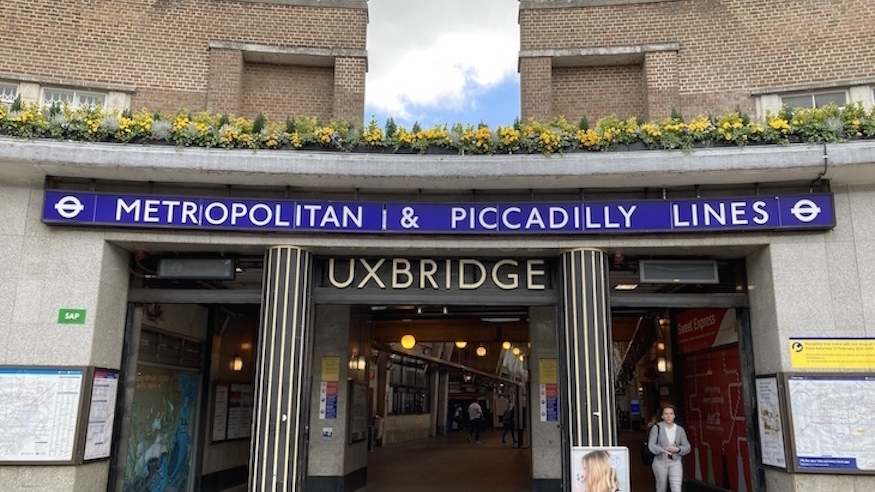
Uxbridge sits at the end of two London Underground lines: the Metropolitan and the Piccadilly, both run by Transport for London. Both terminate at Uxbridge station, which makes it a proper, well-connected part of the Underground network, not a far-flung outpost.
That direct Tube connection is one of the clearest practical signs of Uxbridge’s London status. A town with its own Underground terminus, served by two separate lines, is thoroughly part of the city’s transport system.
Uxbridge’s postcode and dialling code
Uxbridge uses the UB8 postcode district, part of the wider UB postcode area that covers much of Hillingdon borough. Its dialling code is 01895, shared with other parts of the borough rather than London’s inner 020 code.
That dialling code is another detail that sometimes throws people off. Inner London numbers mostly use 020. Uxbridge’s 01895 code is standard for most of outer London, though, where plenty of genuinely London postcodes and areas still use a geographic STD code rather than 020.
How Uxbridge compares to nearby towns
Uxbridge sits close to several towns just over the Greater London boundary, including Denham and Gerrards Cross in Buckinghamshire. Those towns are genuinely not in London. That’s part of what makes the boundary feel blurry locally, since the transition from London to Buckinghamshire happens gradually rather than with an obvious change in surroundings.
Within Hillingdon borough itself, Uxbridge sits alongside towns like Hayes, Ruislip and West Drayton, all of which share the same London Borough of Hillingdon status.
The 1965 change that moved Uxbridge into London
The shift happened under the London Government Act 1963, which took effect in 1965. That act redrew the boundaries of London entirely, creating the Greater London Council and the 32 London boroughs that still exist today.
Before that act, London itself was a much smaller area, broadly matching the old County of London. Everything around it, including Uxbridge, sat in surrounding counties like Middlesex, Surrey, Kent and Essex. The 1963 act abolished Middlesex almost entirely, folding most of it into the new Greater London.
Hillingdon was one of the new boroughs created from that process, formed by merging the former urban districts of Uxbridge, Hayes and Harlington, and Ruislip-Northwood, along with Yiewsley and West Drayton. Uxbridge became the natural administrative centre for the new borough, given its existing role as a market town and local hub.
Uxbridge’s status compared to other edge-of-London towns
Uxbridge isn’t unique in sitting right at London’s boundary. Towns like Croydon, Bromley and Romford all sit at similarly outer edges of Greater London, in different directions. Like Uxbridge, several of them were also historically part of a different county before 1965.
What makes Uxbridge a slightly clearer case than some boundary towns is its direct Underground connection. Plenty of outer London towns rely on National Rail alone, without a Tube line reaching all the way out. Uxbridge’s two Underground termini put it on firmer ground as a recognisably London town, despite sitting right at the city’s western edge.
Living in Uxbridge as part of London
For residents, being part of London brings the usual mix of practical implications. Council tax, planning permission, waste collection and local elections all run through the London Borough of Hillingdon, rather than through Buckinghamshire County Council or any other neighbouring authority.
Uxbridge residents are also covered by the Mayor of London and the London Assembly, in the same way as anyone living in Westminster or Camden. That’s a meaningful difference from genuinely non-London towns just a few miles away, like Gerrards Cross, which fall under Buckinghamshire’s own local government structure instead.
For anyone moving to the area, or just trying to settle a local debate, that’s the clearest practical test. If an address falls under the London Borough of Hillingdon, it’s in London, regardless of how suburban or green the surroundings might feel compared to zone 1.
Things to do in Uxbridge
Being on the edge of London doesn’t mean Uxbridge is short on things to see. The town has a genuinely strong mix of history, shopping and green space, all within easy reach of the station.
The Battle of Britain Bunker. This underground WWII operations room sits just outside the town centre, 60 feet below ground. It coordinated RAF fighter squadrons during the Battle of Britain, and Winston Churchill visited in August 1940. The museum opened in 1985, with a new above-ground visitor centre added in March 2018.
The Chimes Shopping Centre. Uxbridge’s main shopping centre sits right on the High Street, anchoring the town centre’s retail offer alongside the surrounding independent shops.
Brunel University London. The university’s main campus sits on the edge of Uxbridge, bringing a steady flow of students through the town and supporting a genuinely lively local food and nightlife scene during term time.
The Grand Union Canal. Uxbridge sits close to the canal, which offers a quieter, scenic walking route away from the High Street, popular with runners and dog walkers alike.
St Margaret’s Church. A medieval parish church in the town centre, worth a look for anyone interested in Uxbridge’s older history, well before it became part of London in 1965.
A quick way to settle the debate
If this comes up in conversation, the simplest proof point is the borough itself. Ask whether an address sits within the London Borough of Hillingdon. If it does, it’s in London, whatever the area feels like on the ground.
The Underground connection is the second-easiest check. Uxbridge station, sitting at the end of both the Metropolitan and Piccadilly lines, is about as clear a sign of London status as there is. Towns genuinely outside Greater London don’t get their own Tube terminus.
Frequently asked questions
Is Uxbridge in London? Yes. Uxbridge is part of the London Borough of Hillingdon, in west London, and has been part of Greater London since 1965.
Is Uxbridge in London or Middlesex? Uxbridge was historically in Middlesex, a county that stopped existing administratively in 1965. Today, it’s part of Greater London, not Middlesex.
Is Uxbridge in west London? Yes. Uxbridge sits in west London, close to the boundary with Buckinghamshire, roughly 15.4 miles northwest of Charing Cross.
Is Uxbridge in Greater London? Yes. Uxbridge has been formally part of Greater London since 1965, within the London Borough of Hillingdon.
What borough is Uxbridge in? The London Borough of Hillingdon. Uxbridge is also that borough’s administrative headquarters.
Does Uxbridge have an Underground station? Yes. Uxbridge station sits at the end of both the Metropolitan and Piccadilly lines.
What postcode does Uxbridge use? UB8, part of the wider UB postcode area covering much of Hillingdon borough.
Why do people still call Uxbridge part of Middlesex? Middlesex was Uxbridge’s historic county before 1965. The name still appears in older addresses and local habit, even though it hasn’t been the official administrative area for decades.
What is there to do in Uxbridge? The Battle of Britain Bunker, The Chimes Shopping Centre, Brunel University London, the Grand Union Canal and St Margaret’s Church are all within easy reach of Uxbridge town centre.
Is Uxbridge a nice place to live? It offers a suburban, town-centre feel with strong transport links, a university, shopping, and genuine green space along the canal, all while being formally part of London.
How far is Uxbridge from central London? About 15.4 miles northwest of Charing Cross, reachable directly by the Metropolitan and Piccadilly Underground lines.
More local Hillingdon coverage from Hillingdon News, including dentists in West Drayton and Hillingdon Hospital parking.